
Open the case. Find the truth.
Identify antique pocket watches by movement, maker, serial number, grade, case material and configuration before you buy, sell or restore one.
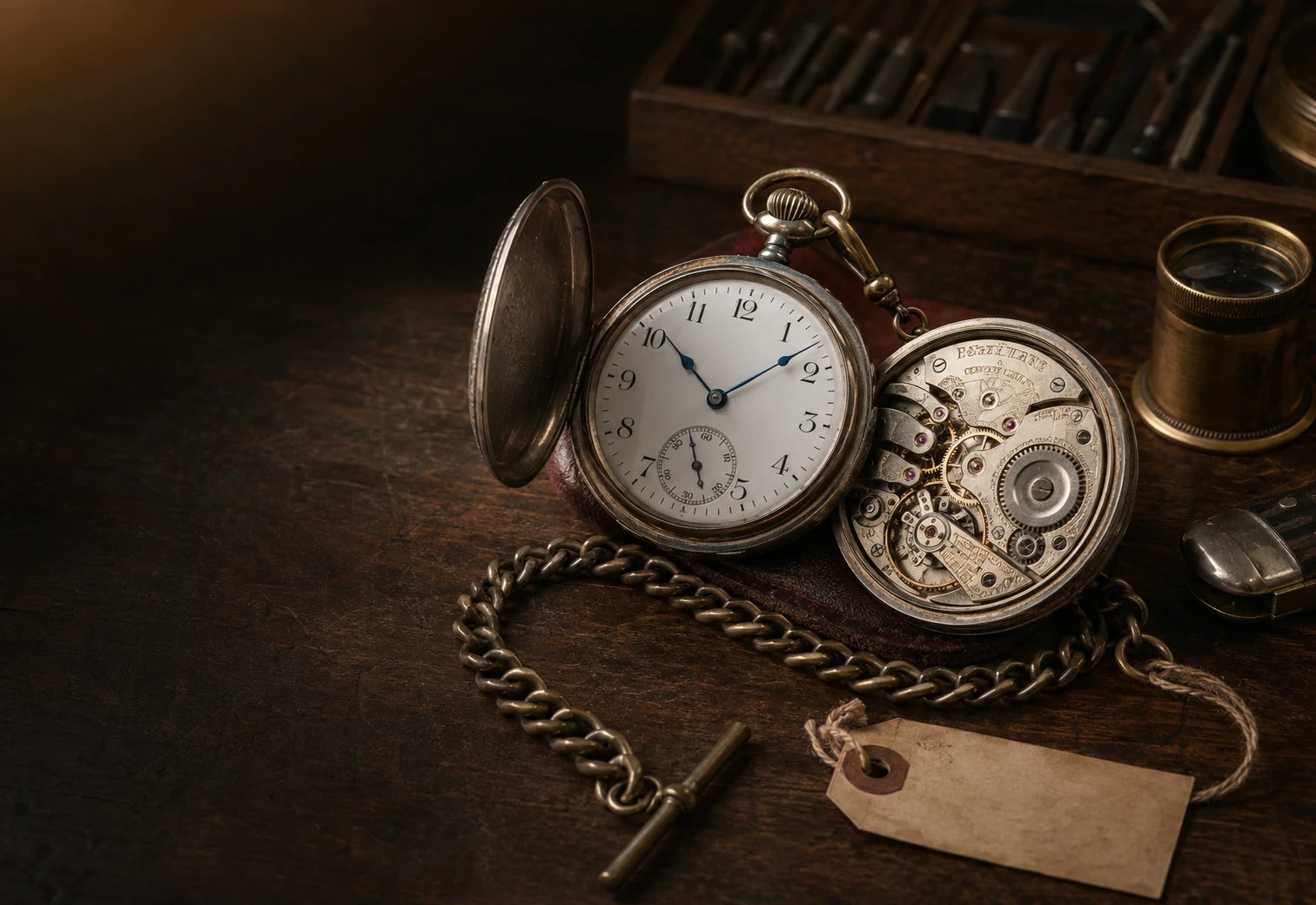
Holiday gift guide
Pocket watch gifts, and what to check first
Railroad-grade Hamiltons and Elgins, heirloom hunters, chains and domes, with the service, married-case and gold-fill checks before you buy.
Open the gift guideMore gift ideas: How to date a pocket watch Married case and movement More collector gift guides
The movement matters more than the dial name.
Identify it
Document the movement, serial number, jewel count, case marks and dimensions.
Evaluate it
Understand how grade, condition, case material and originality affect value.
Verify railroad claims
Screen lever setting, adjustments, jewel count, configuration and exact grade.
Plan restoration
Know when a watch needs routine service, parts, case work or specialist repair.
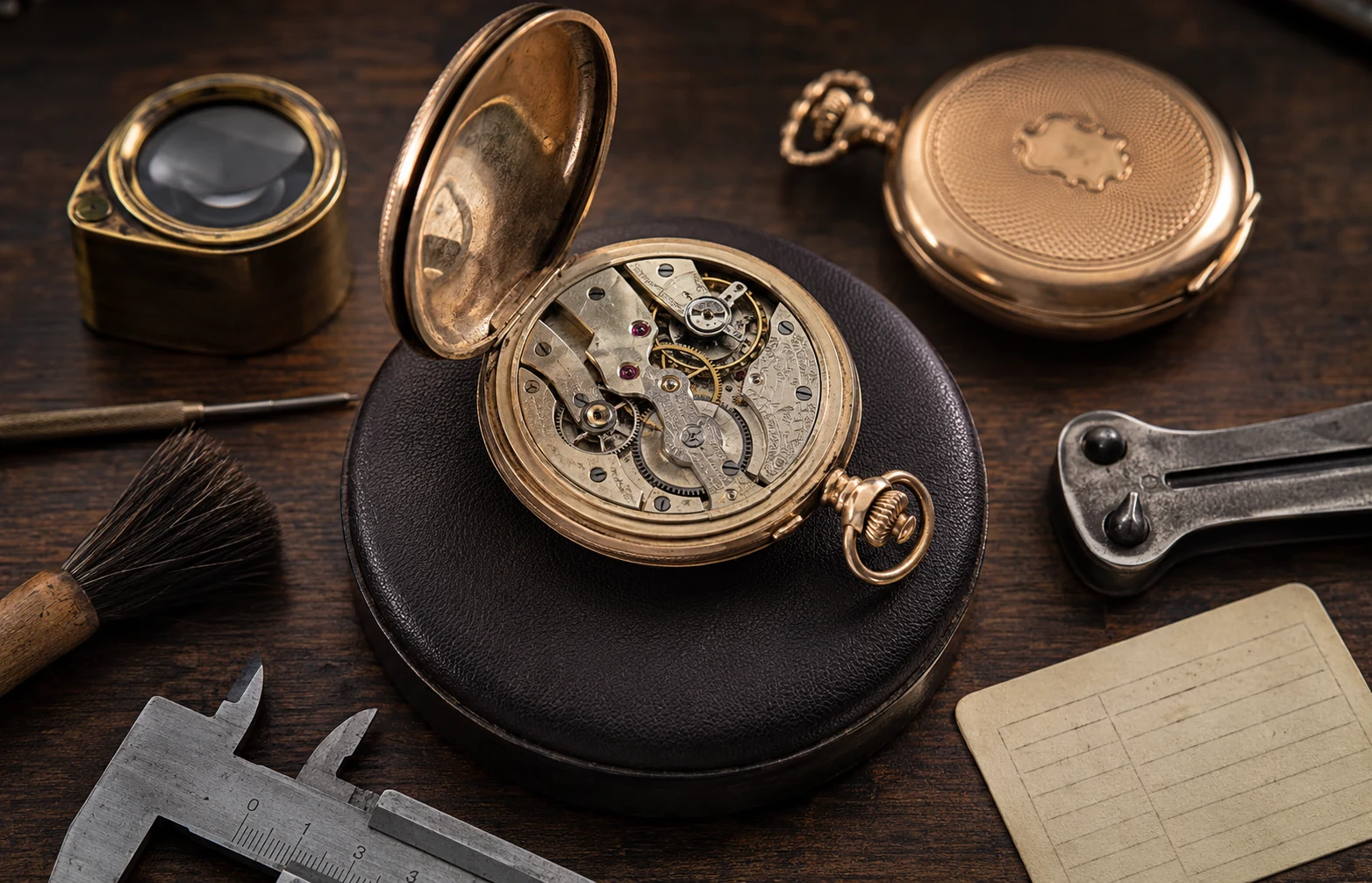
Look inside before you believe the listing.
Seller titles are often vague. A useful identification starts with the movement photo, serial range, jewel count, case marks, dial condition and whether the parts still belong together.
- Ask for clear movement and case-back photos.
- Confirm serial numbers against the maker, not the case.
- Separate cosmetic wear from movement damage.
- Check originality before paying for a story.
Explore the great movement companies.
Hamilton
High-grade American movements, railroad service and well-documented grades.
Scale and varietyElgin
One of the broadest American production histories, from common to highly collectible.
Industrial pioneerWaltham
Foundational American production with extensive grade and serial variation.
Collector favoritesIllinois
Railroad grades, private-label movements and strong finishing.
Distinctive historyHampden
American movements with interesting grades, markings and industrial history.
Early prestigeE. Howard
Historically important American watches with distinct numbering and construction.
Score condition.
Screen movement, dial, case, hands and crystal before comparing listings.
Open condition tool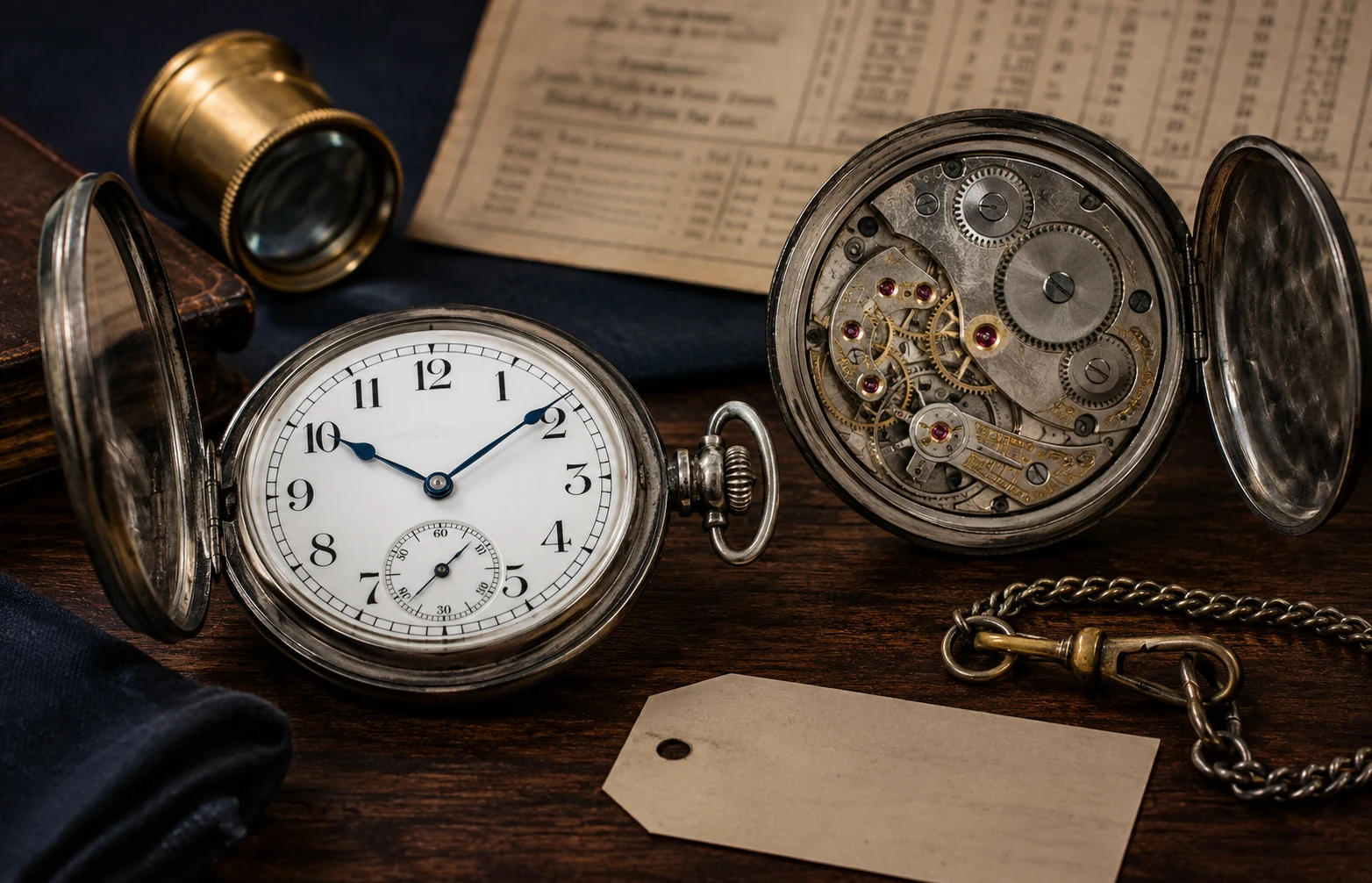
Screen railroad features.
Test the visible feature set before accepting a seller’s railroad-grade claim.
Check railroad features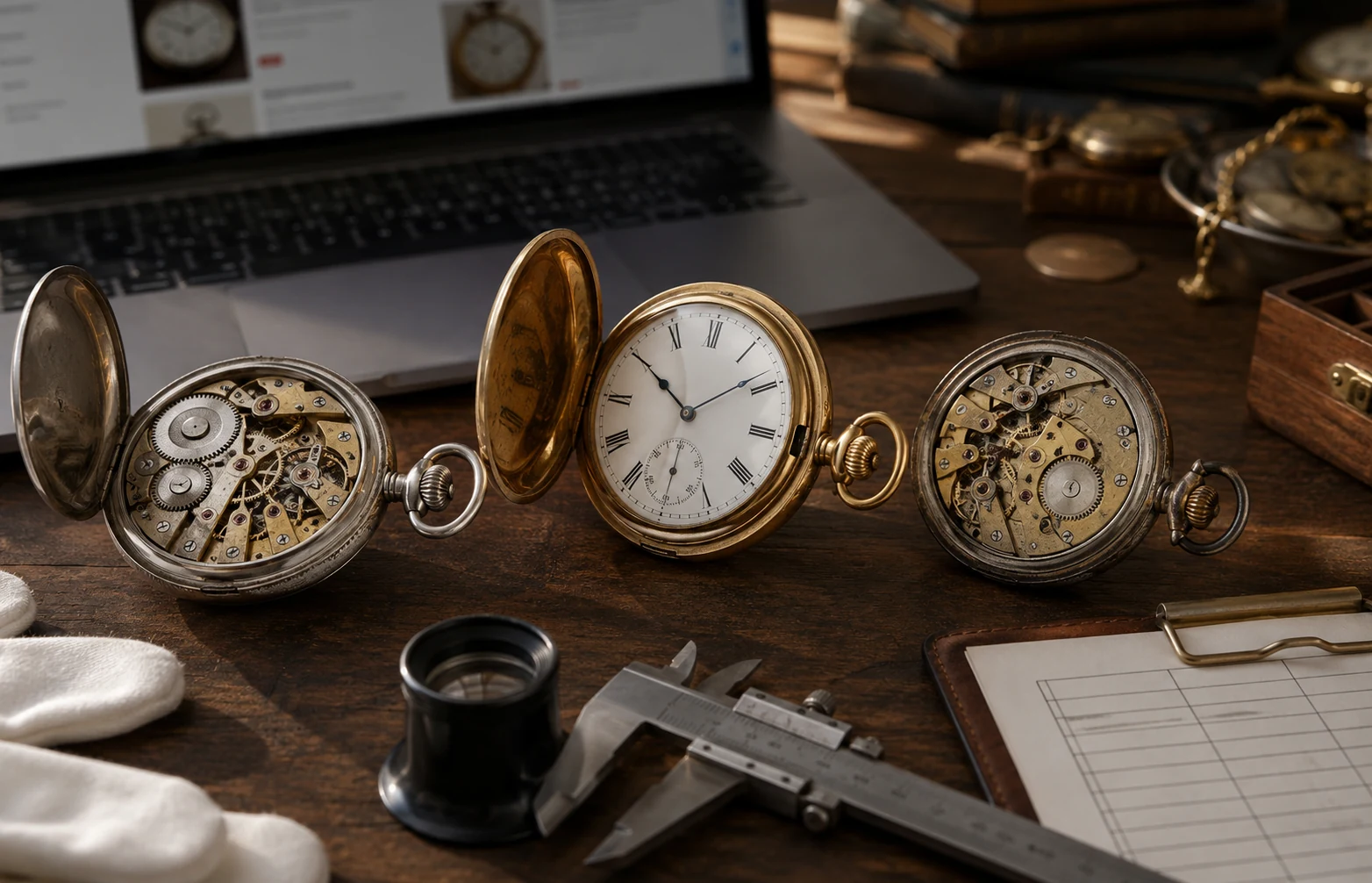
Buy with the movement in view.
Before you compare prices, compare the watch itself: movement grade, case material, dial condition, service history, originality and return terms.
Some merchant links are affiliate links. Your eBay Partner Network campaign is installed throughout the commercial pages.